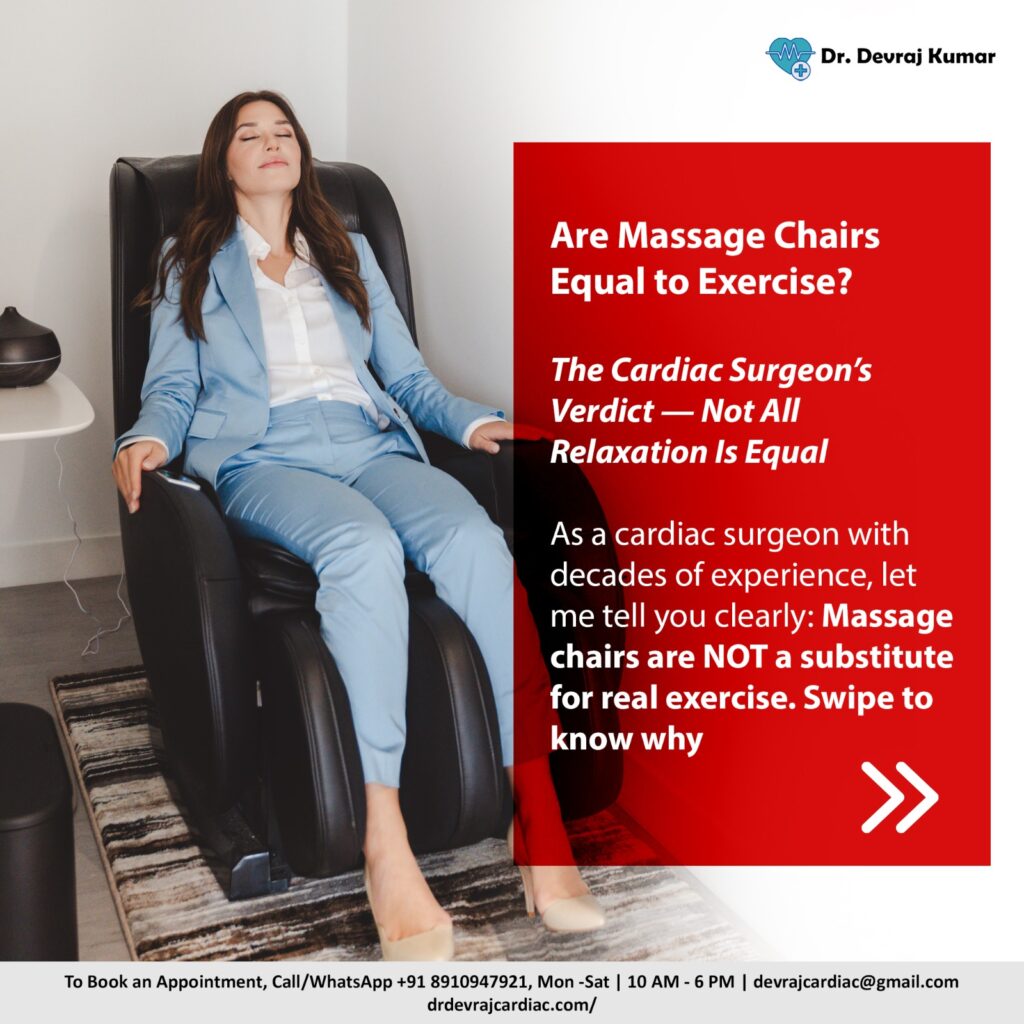
In recent years, massage chairs have become a popular “wellness hack.” Advertisements promise stress relief, improved blood circulation, and even “cardiovascular benefits”—often suggesting that 15 minutes in a massage chair is as good as a brisk walk.
As a cardiac surgeon with decades of experience, let me tell you clearly:
👉 Massage chairs are NOT a substitute for real exercise.
They may complement, but they can never replace the physiological impact of active movement.
⸻
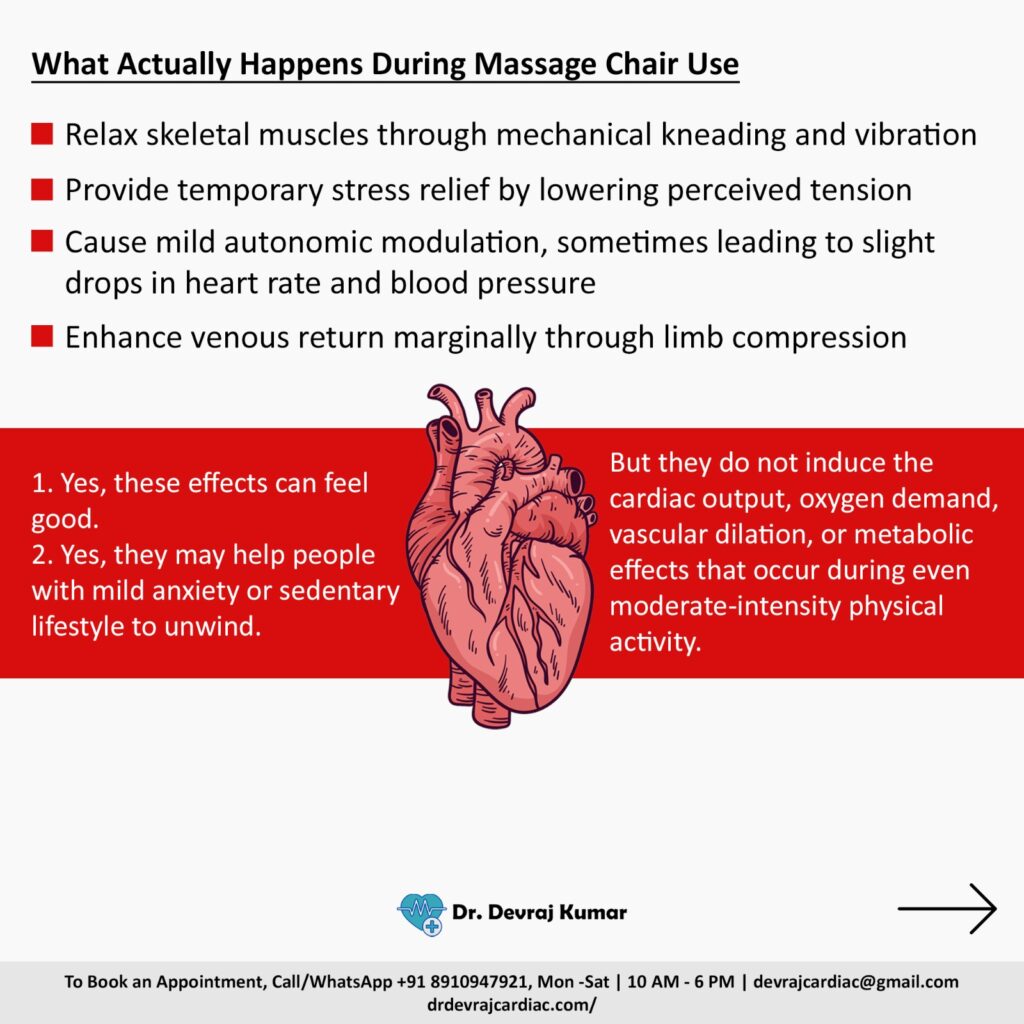
🔍 What Actually Happens During Massage Chair Use
Massage chairs primarily:
• Relax skeletal muscles through mechanical kneading and vibration
• Provide temporary stress relief by lowering perceived tension
• Cause mild autonomic modulation, sometimes leading to slight drops in heart rate and blood pressure
• Enhance venous return marginally through limb compression
✅ Yes, these effects can feel good.
✅ Yes, they may help people with mild anxiety or sedentary lifestyle to unwind.
❌ But they do not induce the cardiac output, oxygen demand, vascular dilation, or metabolic effects that occur during even moderate-intensity physical activity.
⸻
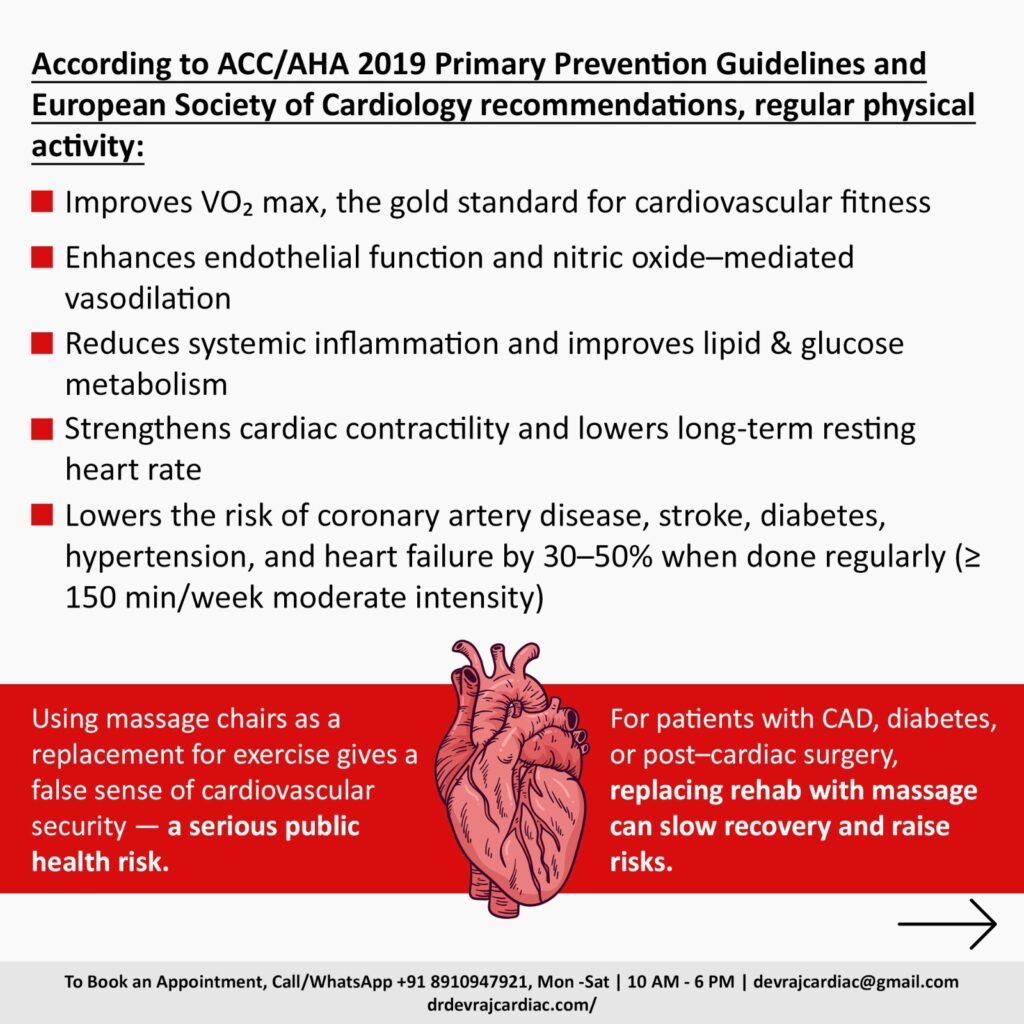
🫀 What Exercise Does (That Massage Chairs Cannot)
According to ACC/AHA 2019 Primary Prevention Guidelines and European Society of Cardiology recommendations, regular physical activity:
• Improves VO₂ max, the gold standard for cardiovascular fitness
• Enhances endothelial function and nitric oxide–mediated vasodilation
• Reduces systemic inflammation and improves lipid & glucose metabolism
• Strengthens cardiac contractility and lowers long-term resting heart rate
• Lowers the risk of coronary artery disease, stroke, diabetes, hypertension, and heart failure by 30–50% when done regularly (≥150 min/week moderate intensity)
👉 No massage chair can replicate these metabolic and hemodynamic adaptations.
⸻
⚠️ The Danger of the “Shortcut Mindset”
The wellness industry loves “easy fixes.” But for heart health, shortcuts can be dangerous:
“Using massage chairs as a replacement for exercise gives a false sense of cardiovascular security — a serious public health risk.”
In recent years, massage chairs have become a popular “wellness hack.” Advertisements promise stress relief, improved blood circulation, and even “cardiovascular benefits”—often suggesting that 15 minutes in a massage chair is as good as a brisk walk.
As a cardiac surgeon with decades of experience, let me tell you clearly:
👉 Massage chairs are NOT a substitute for real exercise.
They may complement, but they can never replace the physiological impact of active movement.
⸻
🔍 What Actually Happens During Massage Chair Use
Massage chairs primarily:
• Relax skeletal muscles through mechanical kneading and vibration
• Provide temporary stress relief by lowering perceived tension
• Cause mild autonomic modulation, sometimes leading to slight drops in heart rate and blood pressure
• Enhance venous return marginally through limb compression
✅ Yes, these effects can feel good.
✅ Yes, they may help people with mild anxiety or sedentary lifestyle to unwind.
❌ But they do not induce the cardiac output, oxygen demand, vascular dilation, or metabolic effects that occur during even moderate-intensity physical activity.
⸻
🫀 What Exercise Does (That Massage Chairs Cannot)
According to ACC/AHA 2019 Primary Prevention Guidelines and European Society of Cardiology recommendations, regular physical activity:
• Improves VO₂ max, the gold standard for cardiovascular fitness
• Enhances endothelial function and nitric oxide–mediated vasodilation
• Reduces systemic inflammation and improves lipid & glucose metabolism
• Strengthens cardiac contractility and lowers long-term resting heart rate
• Lowers the risk of coronary artery disease, stroke, diabetes, hypertension, and heart failure by 30–50% when done regularly (≥150 min/week moderate intensity)
👉 No massage chair can replicate these metabolic and hemodynamic adaptations.
⸻
⚠️ The Danger of the “Shortcut Mindset”
The wellness industry loves “easy fixes.” But for heart health, shortcuts can be dangerous:
“Using massage chairs as a replacement for exercise gives a false sense of cardiovascular security — a serious public health risk.”
For patients with coronary artery disease, diabetes, or post–cardiac surgery recovery, replacing prescribed walking or rehab programs with passive massage can delay recovery, worsen conditioning, and even increase complication risk.
⸻
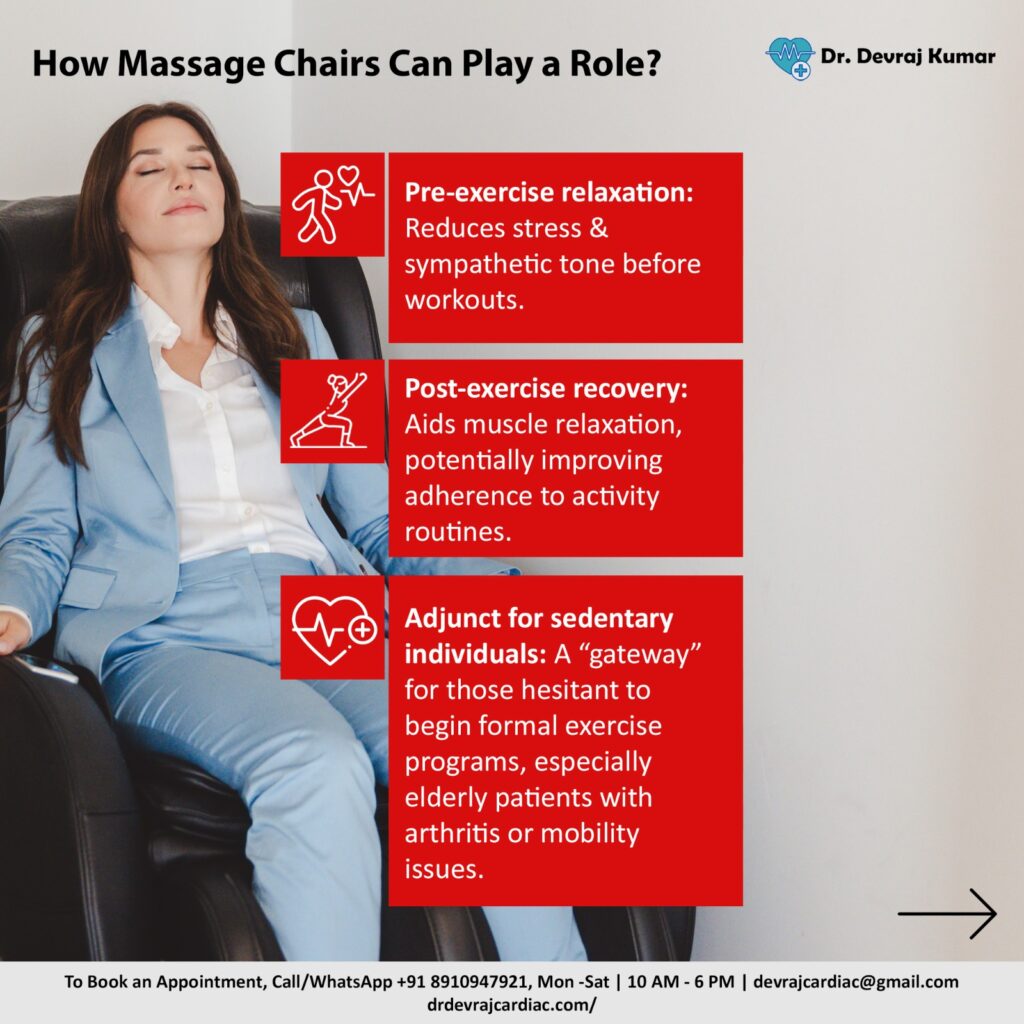
🤝 How Massage Chairs Can Play a Role
When used wisely, massage chairs can support cardiovascular well-being:
• 🧘 Pre-exercise relaxation: Reduces stress & sympathetic tone before workouts.
• 💤 Post-exercise recovery: Aids muscle relaxation, potentially improving adherence to activity routines.
• 🪄 Adjunct for sedentary individuals: A “gateway” for those hesitant to begin formal exercise programs, especially elderly patients with arthritis or mobility issues.
➡️ But they must be positioned as a tool for recovery, not a replacement for movement.
⸻
📝 The Surgeon’s Final Verdict
🪑 Massage Chairs = Comfort
🏃 Exercise = Cardiovascular Longevity
Massage chairs are great for relaxation — not rehabilitation. They are supportive tools, not cardiovascular training devices.
If you truly want to protect your heart:
💡 Prioritize regular, guideline-based physical activity
💡 Use massage as a bonus, not a substitute
⸻
📌 Take-Home Message (Guideline Summary)
• ✅ ACC/AHA & ESC: Minimum 150 minutes/week of moderate or 75 minutes/week of vigorous activity for optimal cardiovascular protection.
• ✅ Massage therapy may reduce stress & BP transiently but is not equivalent to exercise in any guideline.
• ✅ Use massage chairs for comfort & recovery; never as an alternative to exercise.
⸻
👨⚕️ About the Author
Dr. Devraj Kumar
Senior Cardiac Surgeon |
Head of CTVS, BP Poddar Hospital, Kolkata
81+ adult cardiac surgeries in a single month | Awarded Best Cardiac Surgeon of India 2024
💬 Do you use a massage chair regularly? Has it changed your activity levels?
Share your experience below — let’s separate relaxation myths from heart health truths.
HeartHealth #CardiacSurgery #ExerciseMatters #MassageChairMyth #PreventiveCardiology #ACC #AHA #LinkedInHealth #DrDevrajKumar