🚨 The Heart Attack You Don’t Feel Coming
Imagine having a heart attack… without the classic crushing chest pain.
No radiating pain, no dramatic collapse — just mild breathlessness, fatigue, or even indigestion.
For millions of people with diabetes, this is not fiction.
This is reality.
And it’s deadly.
⸻
🧠 Why Diabetes Changes the Game
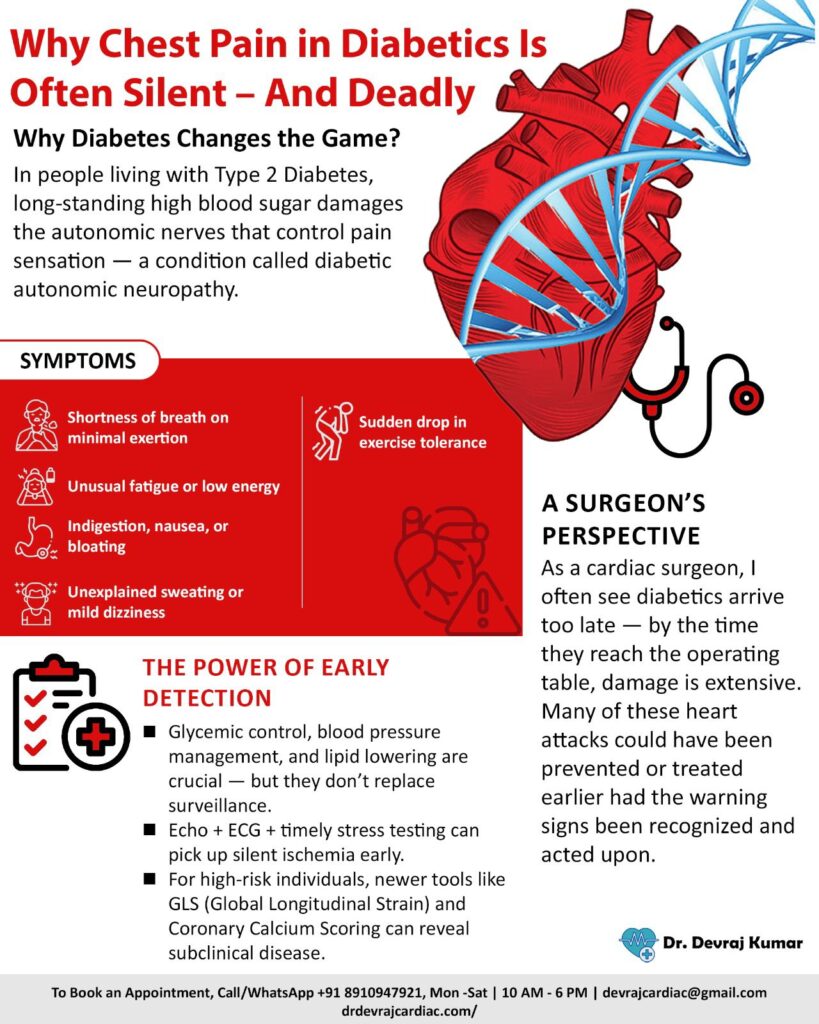
In people living with Type 2 Diabetes, long-standing high blood sugar damages the autonomic nerves that control pain sensation — a condition called diabetic autonomic neuropathy.
This blunts the heart’s natural “alarm system.”
👉 The result: Silent Myocardial Ischemia — reduced blood supply to the heart without the tell-tale pain.
👉 According to ACC/AHA Guidelines, diabetics are up to 2–4 times more likely to have a heart attack, and a significant portion of these are clinically silent.
⸻
⚡ Silent Doesn’t Mean Harmless — It’s More Dangerous
When chest pain is absent, patients present late, often when:
• A large part of the heart muscle is already damaged
• Heart failure or cardiogenic shock sets in
• Or the first symptom is sudden cardiac death
Data from major trials (e.g., JACC, Circulation) show that silent ischemia in diabetics carries a worse prognosis than typical angina presentations.
⸻
🩻 Subtle Signs You Should Never Ignore
In diabetics, heart disease may masquerade as:
• ✅ Shortness of breath on minimal exertion
• ✅ Unusual fatigue or low energy
• ✅ Indigestion, nausea, or bloating
• ✅ Unexplained sweating or mild dizziness
• ✅ Sudden drop in exercise tolerance
These may seem “minor” — but in diabetics, minor symptoms can signal major events.
⸻
🧭 Guideline-Based Red Flags
Per 2023 ACC/AHA Guidelines on Chronic Coronary Disease and 2025 JACC updates:
• All diabetics >40 yrs, especially with additional risk factors (HTN, dyslipidemia, smoking, family history), should undergo periodic cardiac evaluation, even if asymptomatic.
• Non-invasive tests like stress ECG, stress echo, or coronary CT angiography may be considered in selected high-risk groups.
• Prompt referral to a cardiologist is warranted if there are subtle ischemic equivalents.
⸻
🛡 The Power of Early Detection
✅ Glycemic control, blood pressure management, and lipid lowering are crucial — but they don’t replace surveillance.
✅ Echo + ECG + timely stress testing can pick up silent ischemia early.
✅ For high-risk individuals, newer tools like GLS (Global Longitudinal Strain) and Coronary Calcium Scoring can reveal subclinical disease.
⸻
🫀 A Surgeon’s Perspective
As a cardiac surgeon, I often see diabetics arrive too late — by the time they reach the operating table, damage is extensive.
Many of these heart attacks could have been prevented or treated earlier had the warning signs been recognized and acted upon.
⸻
📢 Key Takeaway: If You’re Diabetic, Silence Isn’t Golden
• 🚨 Don’t wait for pain.
• 🧠 Listen to subtle signs.
• 📆 Screen periodically.
• 🫀 Partner with your heart specialist early, not after the event.
Your heart may not shout, but it often whispers.
Learn to listen — it can save your life.
⸻
✍️ About the Author
Dr. Devraj Kumar is a senior cardiac surgeon specializing in CABG, total arterial revascularization, and valve surgery. He leads the CTVS Department at BP Poddar Hospital, Kolkata, and has a passion for bringing advanced cardiac care to rural India.
⸻
🔗 #CardiacSurgery #DiabetesAwareness #SilentHeartAttack #Cardiology #LinkedInArticle #HeartHealth #PreventiveCardiology #ACC #AHA #JACC #DrDevrajKumar